Disasters Avoided

Disasters AvoidedDisasters AvoidedDisasters Avoided

Disasters Avoided

Disasters AvoidedDisasters AvoidedDisasters Avoided
  • Home
  • Framing Disasters
    • Defining a disaster
    • Avoiding a disaster
    • A symphony of action
    • An emerging model
    • Governance Accountability
    • Tools & techniques
  • Case Studies
    • Case Studies list
    • Map view
  • General Information
    • Our articles and papers
    • Our interviews
    • Related activities
    • Going beyond the SDGs
    • Urban Disaster Risk
    • Contact us
  • News
    • Our Newsletter
    • Disaster preparedness
  • More
    • Home
    • Framing Disasters
      • Defining a disaster
      • Avoiding a disaster
      • A symphony of action
      • An emerging model
      • Governance Accountability
      • Tools & techniques
    • Case Studies
      • Case Studies list
      • Map view
    • General Information
      • Our articles and papers
      • Our interviews
      • Related activities
      • Going beyond the SDGs
      • Urban Disaster Risk
      • Contact us
    • News
      • Our Newsletter
      • Disaster preparedness
  • Home
  • Framing Disasters
    • Defining a disaster
    • Avoiding a disaster
    • A symphony of action
    • An emerging model
    • Governance Accountability
    • Tools & techniques
  • Case Studies
    • Case Studies list
    • Map view
  • General Information
    • Our articles and papers
    • Our interviews
    • Related activities
    • Going beyond the SDGs
    • Urban Disaster Risk
    • Contact us
  • News
    • Our Newsletter
    • Disaster preparedness

The 2005 Kashmir earthquake - a new way to rebuild

Key Points

How to build forwards better after a major event

  • The 2005 Kashmir earthquake claimed the lives of over 79,000 people across Pakistan. According to Pakistan government figures, 19,000 children died, most of them in collapses of school buildings. 1 People also perished in India and Afghanistan (exact figures for total fatalities varies). Over 3.5 million people were rendered homeless. 
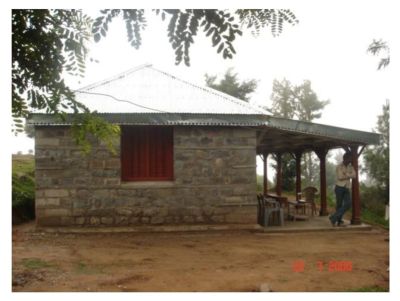
  • Three homes in Bagh, one of the worst-affected areas, were rebuilt using salvaged lime mortar, stone and timber from damaged houses, with local masons and carpenters involved.
  • Despite more than 160 earthquakes since their construction, all three homes are still standing. 

An earthquake-resistant house in Bagh, Kashmir | Indus Earth Trust

The importance of localness

Working together to avoid disasters

Since the earthquake in 2005 in Kashmir – which claimed the lives of over 79,000 people and destroyed more than 32,000 homes in Pakistan, with additional fatalities and destruction in India and Afghanistan 1 – Indus Earth Trust, a non-profit organisation dedicated to empowering vulnerable rural communities, along with CRAterre 2, and the International Centre for Earth Construction and lead in the venture, took it upon themselves to support the recovery of locals using salvaged materials from damaged homes in the region.


The organisations utilised materials from collapsed houses, particularly lime mortar, stone and timber, to create three different low-carbon houses across different locations in Bagh, Kashmir. 3 “Traditionally these houses have tree trunks. We sawed the trunks to make several beams, and we reinforced the corners of the houses (the weakest points structurally) by making cross-bracing using the sawn timber. The walls were made using locally available stone with earth / lime mortar.” said Shahid Khan, chief technical advisor at the Indus Earth Trust. 


Local masons and carpenters took up much of the construction process, with 40 workers trained in earthquake-resistant architecture by the three supporting organisations named above.

The region of Pakistan in which the houses were built – which falls under Seismic Zone V – remains extremely earthquake-prone and has witnessed over 160 earthquakes, including a massive tremor of 7.5 magnitude in 2015, in the last twelve years. To this day, these three houses still stand. 


The joint venture by CRAterre and Indus Earth Trust was specifically focused on Pakistan. 


Sources:

1. https://reliefweb.int/report/pakistan/kashmir-earthquake-october-8-2005-impacts-pakistan 

2. https://craterre.org/en/case/cachemire-pakistanais-appui-a-la-reconstruction-dhabitat-en-zone-rurale-suite-au-tremblement-de-terre-du-8-octobre-2005/ 

3. https://www.indusearthtrust.org/project/disaster-resilient-zero-carbon-housing/
Sample plans and photos

    Download this Case Study

    Our Case Study and supporting information is available in the following document:

    DA-Case-Study-Kashmir-earthquake-rebuild-Aug2026 (pdf)Download

    Copyright © 2023 - 2026 Disasters Avoided - All Rights Reserved.

    This website is part of the Suredis network

    • Data & Information

    This website uses cookies.

    We use cookies to analyze website traffic and optimize your website experience. By accepting our use of cookies, your data will be aggregated with all other user data.

    DeclineAccept